

27 Jun Advanced Floating Photovoltaic Solutions for Sustainability
Everything to Know about Modern Floating Photovoltaic
The future of solar energy could very well be located in water rather than on land. The increasing demand for clean energy has created a major performance challenge for industries to generate additional energy while utilizing less land. Floating photovoltaic systems offer the solution.
These high-tech, efficient, and environmentally friendly systems turn previously unused lakes and large bodies of water into renewable energy producers. Here’s why they are a game-changer in the world of renewables.
What Is Exactly Floating Photovoltaic Solutions?
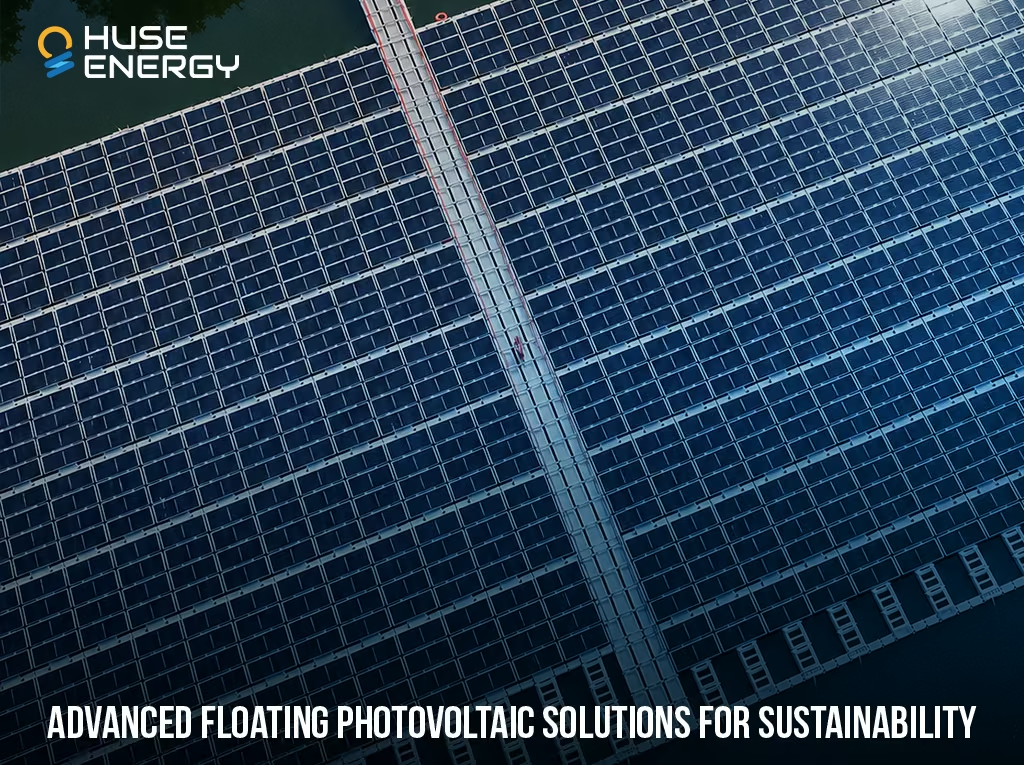
Floating photovoltaic (FPV) systems offer an alternative solution to traditional land-based solar installations. It mainly uses water bodies like reservoirs, lakes, ponds, and industrial water basins (IMs). Unlike traditional solar arrays that occupy land, FPV systems make great use of otherwise unused water surfaces. It helps create a source of clean energy through solar power.
The solar panels themselves are attached to specially engineered floating platforms and maintain stability by being connected to anchoring systems. There are a number of several benefits to utilizing floating photovoltaic systems including more efficient use of land. It reduces evaporation from reservoirs and other bodies of water, and likely increases output from the act of cooling solar panels through contact with water. All three of these can make floating photovoltaic systems an effective way to expand renewable energy.
The Working Pattern of Floating Solar Panels India
The working principle of floating solar panels India is simple and works well. Solar panels are installed on floating structures on lakes, reservoirs, or other bodies of water. These panels capture sunlight and convert it into electricity. The electricity is then sent through cables to special machines called inverters, which convert it to AC and send it to the power grid.
The floating structure is kept stable with anchors, when the water level changes. The water under the panels helps keep them cool which makes them work better. This new way of generating power makes energy and uses water surfaces that are not being used. Floating solar panels, in India help produce energy in the fastest and safest way.
Advantages of Using a Floating Solar Power Plant India
Floating solar technology is really great because it does more than just make energy. It helps resources make better use of the infrastructure.
Floating Solar Power Plant India Ensures Better Performance in High-Temperature Conditions
When it gets really hot outside, solar panels lose their efficiency as the temperature rises. But, when you put the solar panels on the water, the water helps keep them cool so they can keep making energy even when the weather is really hot.
Supports Water Conservation Efforts
The floating solar arrays cover some of the water surface. This means the water is not exposed to the sunlight all the time. So, the water does not evaporate much. This is really helpful in areas with water scarcity.
Reduces Transmission Losses
Many reservoirs are close to cities and factories. The floating solar power plant India can make electricity there. This electricity does not have to travel far to get to the cities and factories. Less energy is wasted when it is being sent to where it is needed. The energy gets to where it’s going more efficiently. This is good for the floating arrays and, for the people who use the energy.
Allows for Easy Expansion
As per your need, energy floating solar plants in India can be made bigger in the same water area. This is a way to make more renewable energy without having to find and develop new land.
How Does Floating Solar Panels India Drive Innovation and Sustainability?
The recent introduction of floating solar panels India has transformed how solar power is created. Floating solar systems consist of solar panels mounted on floating platforms that usually sit-on-or-over existing bodies of water. These floating solar systems use cutting-edge design concepts together with well-designed anchoring systems to safely and securely produce solar energy.
Reliable floating solar panels like the ones Huse Energy offers also take advantage of otherwise “wasted” space to help ease the demand for land. In addition to generating renewable energy, sustainability has been included in the construction of each floating solar project. Before constructing each floating solar project, a thorough environmental impact assessment is conducted. It ensures that the environment/local eco-system are protected.
Why Choose Huse Energy for Getting the Best Floating Photovoltaic Solutions?
The demand for energy is really taking off. This is why a lot of companies are now using floating photovoltaic systems. These systems are great because they help make energy using the already available sources.
At HUSE Energy, we provide high-quality floating PV systems customized for different projects. Our engineering capabilities allow us to provide the most advanced and reliable products in the industry. We pay very close attention to system performance and durability, assuring the system produces the energy at maximum output for an extended period.
FAQs on Floating Photovoltaic
How does the Floating Photovoltaic contribute to sustainability?
The Floating Photovoltaic system generates renewable energy and does not consume valuable land. So, it helps reduce carbon emissions, enabling more efficient resource use.
Can floating solar panels India improve solar panel efficiency?
Floating solar panels India can improve solar panel efficiency due to the water’s cooling effect. It keeps the panels cooler and enables more consistent energy production.
What types of water bodies are suitable for a floating solar power plant India?
Every floating solar power plant India is suitable for reservoirs, lakes, irrigation ponds, quarries, and industrial water bodies. The places where the water body has stable water conditions and enough surface area to support a floating solar power plant are ideal as well.
Do floating solar plants in india affect water quality?
Floating solar plants in India can have little impact on water quality if the plants are designed and constructed properly. They may reduce evaporation from the water body and shade the existing water body, which reduces the amount of algae that may grow.
What industries can benefit from Floating Photovoltaic solutions?
Floating Photovoltaic solutions are beneficial for utilities, manufacturers, water treatment plants, farms, mining companies, and government organizations. By lowering energy costs and providing clean electricity, floating photovoltaic systems help all businesses realize their sustainability objectives.