

27 Aug Floating Solar Project India – How It Works & Why It Matters
Floating Solar Project India: Working and Significance of the Project
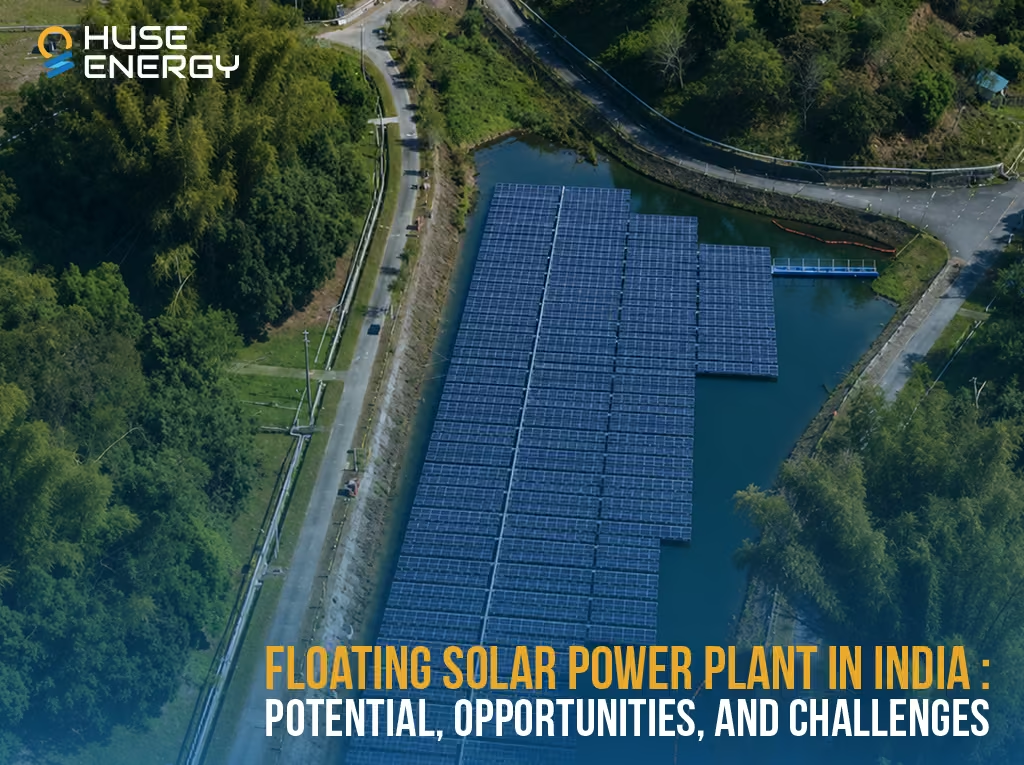
India’s reservoirs and canals are quietly turning into power plants. A well-planned floating solar project in India relies on today saves farmland and cuts water loss. It produces clean electricity for growing industries near rivers and dams. This guide walks through how the technology works on site. It also weighs floating systems against ground-mounted solar, and why the shift matters into 2026.Floating Solar Project India – The Future of Solar Energy
Land doesn’t come cheap, and rooftops can only carry so much. Water bodies across India sit mostly untapped, offering real space for solar without a fight over farmland. Floating platforms hold panels above reservoirs and ponds, leaving farmland untouched. Every floating solar project India builds today pairs regular photovoltaic cells with buoyant, corrosion-resistant floats. Water cools the panels as they work, so output tends to run higher than land-based arrays manage. As renewable targets expand, water-based solar keeps gaining ground.Floating Solar Technology for Efficient Power Generation
Floating solar technology comes down to a handful of parts doing their jobs together. Get one wrong, and the whole plant suffers.Floating PV Structures and Their Key Components
A floating PV structure is built from buoyant floats, walkways, and mounting brackets that carry the panels. HDPE material shrugs off UV rays, corrosion, and rough weather year after year. Anchoring cables and connectors keep every section locked in place.Water Cooling and Solar Panel Performance
Water sitting beneath the panels pulls heat away as sunlight hits the surface. That keeps panel temperatures noticeably lower than on dry ground. Because of the lower output of hot cells, energy production will increase.Floater Design, Anchoring, and System Stability
HUSE energy, a floater manufacturer working across Indian water bodies, builds platforms rated for high wind speeds. Anchoring trusses and mooring systems hold the structure steady through the monsoon season. That stability protects performance over the long run.How Floating Solar Projects Work on Water Bodies
Understanding how a floating solar project India actually runs helps make sense of the process. This happens through several steps, from sunshine harvesting to electricity delivery to the grid.Solar Panels and Floating Platforms
The solar panels are mounted on interlocked floaters, and the arrangement varies according to the water source. Most floating solar plants in India lean on modular platforms that can grow as demand does. Each float does its own job, carrying panels, walkways, or equipment on its own.Power Conversion and Grid Connectivity
The moment sunlight hits the photovoltaic cells, they start generating direct current electricity. Inverters step in from there, turning that DC power into the alternating current the grid actually runs on. From that point, floating plants plug into existing electrical infrastructure without needing much extra rework.Anchoring and Movement Control in Changing Conditions
Mooring lines and anchoring trusses take care of movement as water levels rise and fall through the seasons. Flexible connectors let the whole structure sway with the waves instead of fighting them. That flexibility is what keeps equipment protected when monsoons or other rough patches roll in.Floating Solar vs Ground Mounted Solar – Key Differences
Floating solar vs. ground mounted solar isn’t just a technology question; it’s a land and site question. Both generate clean power, but the details pull apart fast.Floating Solar VS Ground Mounted Solar in Land Utilisation
Ground-mounted systems need wide, clear land parcels, and that land often has other uses lined up. Floating installations use water surfaces that would otherwise sit idle. Where land is scarce or pricey, floating solar simply makes more sense.Differences in Energy Performance and Cooling
Cooler operating temperatures on water tend to push energy output above land-based arrays. Ground panels lose efficiency once summer heat peaks, with nothing to cool them. Water evaporation beneath floating panels drops off too, a quiet added benefit.Installation, Maintenance, and Environmental Considerations
Building on water skips the heavy grading and foundation work that land installations usually need. That said, maintenance crews need boat access and regular diving checks on anchors. Either way, routine inspection catches wear before it becomes a bigger problem.| Factor | Floating Solar | Ground Mounted Solar |
|---|---|---|
| Land Use | Uses water surfaces, saves land | Needs large, clear land parcels |
| Cooling & Output | Cooler operation, higher efficiency | Efficiency drops in peak heat |
| Installation | Skips grading and foundation work | Requires site grading and foundations |
| Maintenance | Boat access, anchor checks | Standard ground-based access |
Why Floating Solar Projects Are the Future of Renewable Energy
Renewable energy targets keep pulling floating solar into the mainstream through 2026 and beyond. As usable land runs thin, water bodies offer a genuinely workable answer. India actually holds over 200 GW of technical floating-solar potential, per CEEW’s assessment. That scale points to real momentum ahead.Why Choose Huse Energy for a Floating Solar Project India
A good floating solar project in India comes down to solid floater engineering, smart cooling design, and anchoring that lasts. Working with a partner who handles both floater manufacturing and EPC execution keeps design and construction on the same page. And floats tested across real wind, water, and wave conditions tend to hold up a lot better over time. At Huse Energy, we build the floaters and run the EPC work ourselves, start to finish. Many floating solar companies in India only cover half of that job. Our approach puts durability first, so projects stay on schedule. Curious what that looks like for your site? Get in touch.FAQs on Floating Solar Project India
What is a floating solar project India, and where can it be installed?
Floating solar projects in India require setting up solar panels on floating platforms that float above reservoirs, canals, and ponds. The technology works effectively where there are calm waters and moderate depths and limited boating activities.
What are the main benefits of floating solar plants in India?
Floating solar plants in India save farmland and cut water evaporation from reservoirs. They also tend to squeeze out more energy, thanks to the cooling effect of the water below.
What should enterprises take into account while selecting the floating solar companies in India?
Look at their expertise in combining both floater manufacturing and engineering, procurement, and construction of floating solar companies in India. The track record of anchoring and site-specific design is equally important.
How is the performance of the solar panel improved by the floating solar technology?
Floating solar technology helps the solar panels remain cool since the solar panels are placed above the water, where the heat is removed through the process of evaporation.
What influences the cost and efficiency of the floating solar project?
Float material, anchoring design, water depth, and site access all shape cost and efficiency. Get the engineering right early, and maintenance stays low while output holds up.
How is floating solar capacity in India contributing to the country's renewable energy targets?
It’s doing more than people realize. Floating solar capacity in India is helping push toward the 500 GW non-fossil fuel goal for 2030, and it's giving the energy mix some real variety beyond just rooftops and ground-mounted panels.