

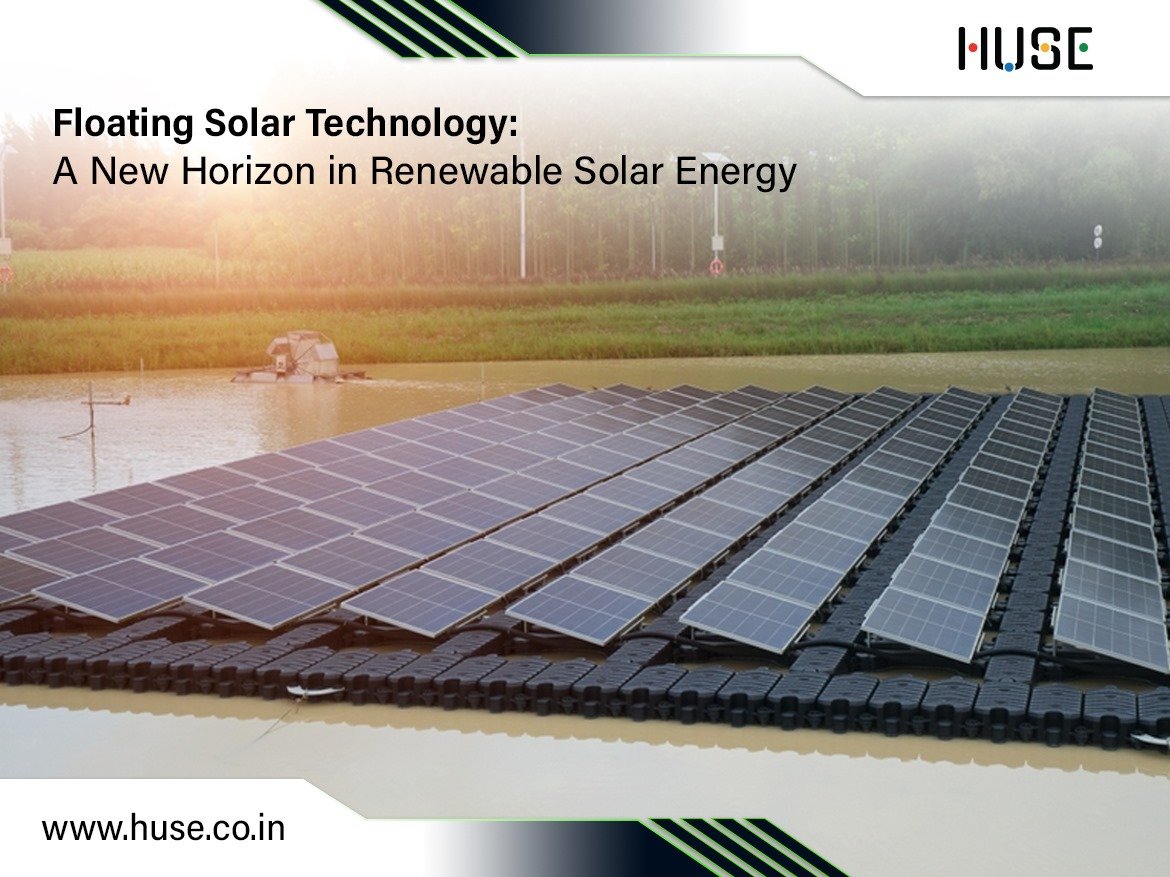
28 Jun Floating Solar PV Panels Technology: A New Horizon in Renewable Solar Energy
Floating solar technology is revolutionizing the solar renewable energy sector by leveraging water surfaces to utilize it for the deployment of floating solar panels into efficient solar power generators. By installing solar panels on reservoirs, lakes, and other bodies of water, this innovative approach maximizes space utilization and boosts energy efficiency.
Powered with advanced data processing techniques, floating solar farms are emerging as a sustainable solution to the growing demand for clean energy, offering concrete environmental and economic benefits.
What is Floating Solar Panel ?
The floating solar panel comprises several critical components: a solar module, vertical and horizontal framing, one inspection footrest, rust-resistant materials, and a module mounting assembly.
Floating PV panels do not hinder the surrounding environment and prevent the evaporation of water in drought-prone regions due to the cooling effect of water below the panels. These panels can be easily deployed and scaled up.
Floating Solar Panel Technology revolutionizes solar renewable energy to enable innovative, cost-effective solutions to support India’s energy transition. As a result of their structural design and method of deployment, these panels are immune to a certain level of buoyancy and are therefore agnostic to slightly harsher weather.
The solar module needs to be highly resistant to humidity. This ensures the module stays lead-free, unaffected by dust, and well-protected from water. Floating solar panels exhibit buoyancy, attributed to polyethylene, a material capable of withstanding up to 2.5 times the actual panel’s weight. To be more precise, these floating panels are made from magnesium alloy coating, known for its excellent corrosion resistance.
Generally, these floating PV panels are developed for energy generation on a large scale to cater to entities with substantial energy demands. Such solar setups provide a consistent power supply during challenging weather conditions and at night.
How Do Floating Solar PV Panels Work?
Floating solar panels generate electricity the same way conventional Floating Solar PV Panels do, but each stage is shaped by the water environment they sit in.
- Solar absorption: Photovoltaic cells on the floating panels absorb sunlight, aided by the reflective quality of the water surface beneath them, which can increase the amount of light reaching the cells.
- DC energy conversion: The absorbed sunlight is converted into direct current (DC) electricity inside the PV cells — the same process as land-based panels, but running at cooler operating temperatures thanks to the water below.
- Inversion to AC: The DC output is routed to inverters — often mounted on their own floating platforms — which convert it into grid-compatible alternating current (AC).
- Transmission to shore: The AC electricity travels through waterproof, marine-grade cabling to shore-based transformers and switchgear, then into the grid or directly to the end user.
Because the floats rise and fall with the water level, the array continues to perform through seasonal water-level changes and heavy rainfall — a natural adaptability that fixed, land-based installations don’t have
Advantages of Floating Solar PV Panels
One advantage of these panels is that they don’t require land space, instead utilizing unused water space. Due to the cooling effects of water bodies, these solar panels produce more electricity than panels on land. The panels are more likely to absorb solar energy if they are floating on a cooler surface.
Solar technology benefits our environment on a grand scale. Floating solar PV panels will reduce algae blooms and reduce evaporation from water bodies, which is particularly beneficial in drought-prone areas.
The investments needed for floating PV panels installations can be less as compared to their land-based counterparts. These panels bypass the need for land acquisition and rigorous site preparations, thus reducing the expenses significantly.
In addition, the FSPV mechanism enables land conservation, allowing farming, agriculture, and irrigation activities to be carried out on the reserved land parcel.
These Floating Solar Panel Technology ensure minimal impact on aquatic life. Owing to their advanced design and correct placement in the water bodies, these structures establish a benign coexistence with the aquatic habitats.
Key Components of a Floating pv panels
- Floats/pontoons: Buoyant HDPE platforms that support the panels, engineered to resist UV degradation, corrosion, and fluctuating water levels.
- Mooring & anchoring systems: Anchors and flexible cables that hold the array in place against wind and water currents without restricting the natural rise and fall of the platform.
- Electrical infrastructure: Marine-rated wiring, floating or shore-based inverters, and transformers built to handle a humid, high-corrosion environment.
- Monitoring systems: Sensors and SCADA/telemetry software that track output, temperature, and structural health in real time, enabling predictive maintenance.
Also Read: Floating Solar Energy Technology Powering Sustainability From Water Bodies
Floating PV Panels in Numbers — Global & India Potential
- Water’s cooling effect can lift floating solar output by up to 15% compared to land-based systems of the same capacity.
- A World Bank/ESMAP assessment identified roughly 6,600 large water bodies globally suitable for floating solar, representing over 4,000 GW of technical potential if just 10% of their surface area were covered.
- At large hydropower reservoirs, covering just 3–4% of the surface area with floating PV can double the site’s installed generation capacity, without any additional land acquisition.
- India has commissioned some of the world’s largest floating solar installations to date, spanning hundreds of acres of reservoirs and backwaters and offsetting well over 100,000 tonnes of CO2 annually per major project — evidence of how quickly the
Applications of Floating PV Panels
There can be reluctance to embrace ground-based solar projects in regions with a lot of open land. The reluctance to install solar panels stems from the concern that the land may not be able to be used for agricultural purposes, construction, or even for preserving its natural state. Furthermore, local residents may be concerned about a solar farm being built near their homes.
FSPV panels can be classified into near-shore and off-shore. At present, most floating solar farms are located near shore, on reservoirs, dams, wastewater storage ponds, and agricultural irrigation ponds. These facilities can also be found offshore, in oceans, seas, and larger water bodies with higher buoyant forces.
Although natural water bodies present opportunities for solar development, artificial reservoirs offer distinct benefits. These reservoirs generally come with pre-existing infrastructure and access roads due to their man-made origins. This is why these facilitates have easier and more cost-effective installation and upkeep of floating solar arrays.
Cost & Lifespan of floating solar panels
Floating solar systems typically carry a higher upfront cost per MW than ground-mounted solar, largely due to the floats, mooring, and marine-grade electrical components. However, that gap has been narrowing as the technology matures and installation volumes grow in India, and the avoided cost of land acquisition and site preparation often offsets a meaningful share of the premium.
Like land-based solar, a well-engineered floating solar installation has an operational lifespan of around 25–30 years, with routine inspection of anchoring, mooring lines, and floats as part of standard O&M.
Floating Solar + Hydropower = Energy Synergy
Rapidly evolving technology has helped make floating solar a more attractive option for energy projects, and with that comes a need for a more in-depth analysis of the different trade-offs it presents. This will build and maintain trust with the project’s technical reviewers.
Some of the trade-offs for floating solar panels projects include greater first-phase costs (compared to land-based projects) for the purchase of specialized floatation devices and installation of electrical cabling designed to withstand marine conditions, as well as anchoring. From an engineering perspective, the design of the mooring system for a floating solar project needs to account for various conditions (such as wave action and wind speed) that may differ from site to site. Like traditional solar projects, floating solar projects raise the concern of potential impact to the ecosystem (due to shading and alteration of the gas exchange process) if an environmental impact assessment is not conducted. In addition, floating solar projects, similar to conventional solar projects, raise concerns about potential long-term impacts to ecosystems if not designed and maintained properly. Huse Energy’s project team takes all of these trade-offs into consideration when assessing and designing floating solar panels projects.
floating solar panels projects complement hydropower projects and vice versa. Together, they have the potential to satisfy global power needs.
The development of floating solar projects at hydropower plants is an attractive opportunity. The building of access roads, substations, and transmission lines to connect the hydropower facilities is already complete, thus reducing the cost and time to construct floating solar projects. The two types of power generation systems can also be integrated to satisfy the demand for electrical power around the clock. Additionally, floating solar panels can reduce the rate of evaporation from the water body and enhance the hydropower generation.
Future Of Solar Renewable Energy
With the advent of floating solar technology, the future of solar renewable energy is undeniably promising. This innovative technology not only optimizes space and enhances energy efficiency but also helps protect the environment by minimizing land use.
As advancements in data processing continue to drive improvements, floating solar farms are set to play a pivotal role in the global shift toward sustainable energy. Embracing Floating Solar Panel Technology promises a cleaner, greener future for a more resilient, greener, and sustainable future for all.
Floating Solar Panels Power in India
The Ministry of New and Renewable Energy (MNRE) of India has prescribed specific terms and conditions to encourage floating solar power projects and offered capital grants to accelerate the implementation of floating solar power projects. Additionally, several state governments of India have taken various initiatives to foster floating solar power projects. The accelerated deployment of floating solar power projects in India is expected to help achieve India’s target of 500 GW of installed renewable energy capacity.
FAQs on Floating Solar PV Panels
Why are floating solar panels more efficient?
Floating solar panels function efficiently due to the natural cooling effect provided by water bodies. This helps balance the panels' temperature, boosting energy and lifespan. The floating solar panels provided by HUSE conserve land and water resources. By utilizing the water bodies, these panels reduce evaporation and inhibit algal blooms., offering a sustainable and renewable approach to floating pv panels.
How much energy does a floating PV panels produce?
The energy production of a floating PV panels is directly linked to factors such as panel efficiency, sunlight availability, location, and installation size. However, it is observed that floating solar panels typically produce equivalent or more energy than ground-mounted panels but with increased efficiency due to the cooling effect of water. At HUSE, our floating solar panels are highly efficient, benefiting from water's reflective qualities and ideal operating temperatures. This setup focuses on increasing energy production and improving the overall performance, making them a sustainable choice for clean energy generation.
Are floating solar panels the future of clean energy production?
Yes, floating solar panels are a promising future for clean energy. They are placed on water bodies like lakes or reservoirs, which helps save land space and reduces water evaporation. These panels can be more efficient due to the cooling effect of water and can also help keep water bodies clean. As technology advances and costs decrease, floating solar panels are expected to play a significant role in expanding renewable energy sources and addressing energy needs sustainably.
What are the benefits of a floating solar system?
How long do floating pv panels have an expected useful life?First, it saves valuable land space, as solar panels are installed on bodies of water like lakes or reservoirs. This setup also reduces water evaporation and helps keep the panels cool, improving their efficiency. Floating solar panels can be easier to install in areas with limited land availability. They can also reduce algae growth by blocking sunlight from reaching the water's surface. Overall, floating solar systems are a practical and efficient way to harness solar energy.
What are the environmental impacts of flfloating solar panels
The environmental impacts of floating solar panels fall into several categories. These systems can cause shading, which might affect aquatic plants and algae growth. They can also influence water dynamics and the exchange of gases between water and air.
Floating solar panels can impact benthic communities (organisms living on or in the bottom of water bodies) and mobile species (animals that move through water). Understanding these impacts helps in designing systems that minimize harm and support sustainable practices.
What are floating PV panels?
Floating PV panels are solar panels installed on floating platforms on bodies of water like lakes or reservoirs. These systems capture sunlight to generate electricity, similar to traditional solar panels. Floating PV panels have the advantage of saving land space and can also help reduce water evaporation and keep the panels cooler, which can improve their efficiency. They are an effective way to harness solar energy while making use of available water surfaces.
How do floating PV panels work?
Floating PV panels work by placing solar panels on floating platforms on water bodies like lakes or reservoirs. These platforms keep the panels above the water, allowing them to capture sunlight. The main benefits include saving land space and reducing water evaporation. The panels are connected to a system that transmits the electricity they generate to the grid or local use. This setup helps in generating clean energy efficiently while utilizing otherwise unused water surfaces.
Example Title
It is expected floating solar panels will have an expected useful life of 25 to 30 years. The floats, mooring lines and electrical components of the system can be inspected and replaced to extend the expected useful life of the system.
Is the levelized cost of energy (LCOE) from floating pv panelsr higher than land based solar?
From a first cost perspective, a floating solar system can be more expensive than a land based solar system, primarily due to the cost of the floats and electrical and mooring components. The location of the system can impact the cost of the system. The premium, if any, can be recovered due to savings in the cost of land and savings in the cost to prepare the land for the solar system. A floating solar system is also more efficient than a land based solar system due to the water in the body of water cooling the system.
What are the key barriers to the expansion of floating pv panels?
These primarily include high upfront costs, more complex engineering for mooring and anchoring, a developing track record, and the need to conduct environmental assessments.
How much better are floating pv panels than land based solar panels?
Floating solar panels are 15% more efficient than land based solar panels due to the cooling effect of the water.
What is the status of floating solar panels in India?
As part of the National Solar Mission, the Ministry of New and Renewable Energy (MNRE) of India offers a policy support for floating solar. A number of Indian states have initiated pilot projects, incentive schemes and/or simplified permission processes for floating solar.
Can floating solar be integrated with other floating solar panels?
Floating solar projects can be developed on large water bodies, especially on reservoirs formed by hydropower plants. As hydropower and solar are complementary to each other, from the economic point of view, it makes sense to develop a combined project.
What is the global potential for floating solar panels?
Thousands of large water bodies are available for implementation of floating solar projects. The potential of these water bodies is in the order of thousands of gigawatts. This is much greater than the current total installed capacity of electricity all over the world.