


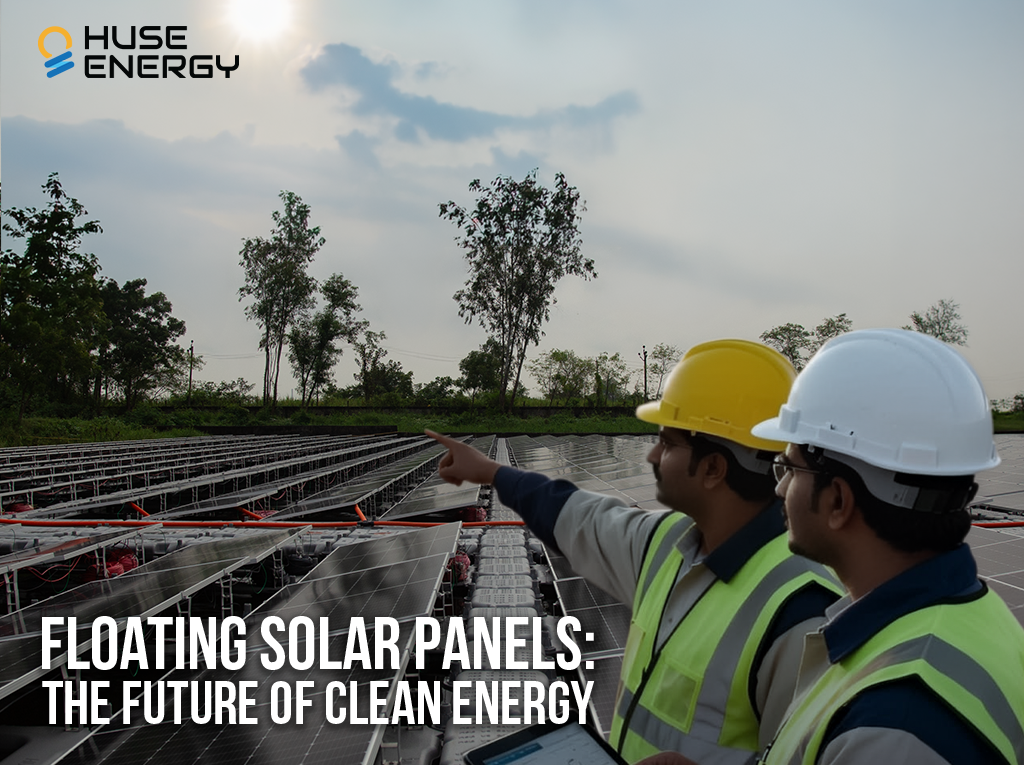
20 Apr Floating Solar Panels: The Future of Clean Energy
Did you know that reservoirs and lakes are not only good at holding water? They are also useful in generating solar power. With the scarcity of land, most floating solar manufacturers are now turning to water bodies to install solar panels. This smart concept is becoming popular throughout the energy industry.
Floating solar panels convert unutilized water places to clean energy sources. They save land, reduce water evaporations, and use natural resources in a prudent manner. There is much more to learn, then. Now, let’s understand how floating solar works, and its key benefits for the renewable energy future.
The Way the Floating Solar Panels Work
Floating solar panels are an addition to normal solar panels. They operate similarly, but can be powered by water. In fact, a lot of floating solar companies in India is currently utilizing this for producing the clean energy. The working process of it is something like the following:1. Absorbing the Sunlight Directly
Floating panels generally comes up with the normal solar cells. This helps in successfully absorbing the sunlight and then transform it into energy.2. Converting That to Energy
Whenever the sunlight hits the solar cells, it creates that energy into direct current (DC) electricity. On top of it, the water underneath helps keeping everything cool so that proper functioning can happen.3. Use of Inverter
DC electricity is fed to an inverter. It converts it into alternating current (AC), which is used in homes and businesses.4. Power Supply
It is then supplied to the grid or consumed directly. After that, it supplies homes, offices and industries. Floating solar panels are built on vacant water areas, and tend to generate more energy due to additional cooling and sunlight reflections.Technological Advances of Floating Photovoltaic Systems
The current solar energy developments are defining the future stage of floating development. These include:- Longer-lasting better float materials.
- High-technology expert monitoring systems with water-based systems.
- Improved remote performance monitoring.
- Combination with energy storage to have a smoother output.