

27 Jul Floating Solar Power Plant in India – Potential, Opportunities, and Challenges
Floating Solar Power Plant in India: Potential & Challenges
The topic of India’s clean energy is no longer about rooftops and wastelands; rather, it revolves around one thing that we usually ignore; water. A floating solar power plant in India operates in the form of reservoirs, dams, and lakes, producing electricity without using a single inch of agricultural land. For a country with less land but abundant water resources, the possibilities are enormous. But like any other new technology, it comes with both opportunities and challenges that merit discussion.
Floating Solar Power Plant in India – Exploring Its Potential and Key Challenges
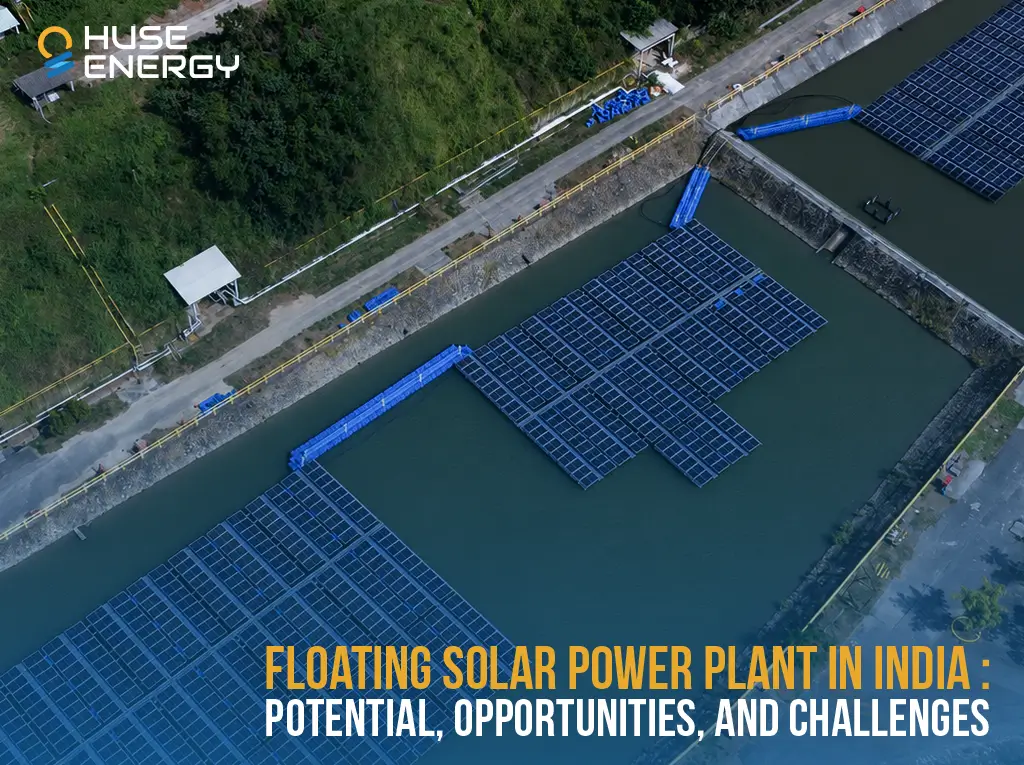
The floating solar power plant in India had always depended on ground-mounted stations, but now waterways present a new option. Solar panels installed in lakes, dams, and irrigation tanks produce energy without overheating.
This change will ensure that the energy goals of the nation are met without having to use land or deforest for these purposes. Moreover, this will provide new sources of income for those who own water bodies.
Expanding Renewable Energy Capacity Across India
India plans to achieve 500 GW of non-fossil energy capacity by 2030, and solar power based on water can contribute to it significantly. As per the 2026 study of the National Institute of Solar Energy (NISE), India’s technical floating solar potential exceeds 102 GW.
Making Better Use of Underutilised Water Bodies
There are thousands of reservoirs, ponds, and dams in India that are not being used for power production. By installing floating solar panels, this otherwise useless area could be put to use for generating renewable power.
Decreasing Requirement of Land for Large Solar Projects
Land acquisition becomes a bottleneck for large solar power plants because of the higher cost and conflicts at the site level. Floating plants overcome this obstacle completely by harnessing the water surface that already exists.
Supporting India’s Clean Energy and Net-Zero Goals
Zero net emissions by the year 2070 are planned by India, and various solar plants play their part in making it true. The floating solar plants in India provide additional power generation without any interruption in the usage of agricultural or forest lands. Growth and conservation need to go together for the future.
What Is Driving the Growth of Floating Solar Power Plants in India?
Factors behind growth include land shortage, faster times of deployment, and greater efficiency due to natural water cooling. Government support through the Solar Energy Corporation of India and state renewable policies encourages developers to consider a floating solar power plant in India built on reservoirs and dams. Public sector companies are also building large installations on hydroelectric reservoirs. Together, these factors are turning floating solar into a practical and scalable clean energy solution for the coming decade.
The floating structure is kept stable with anchors, when the water level changes. The water under the panels helps keep them cool which makes them work better. This new way of generating power makes energy and uses water surfaces that are not being used. Floating solar panels, in India help produce energy in the fastest and safest way.
What Are the Key Challenges Faced by Floating Solar Capacity in India?
There are some challenges in scaling up the floating solar capacity in India. The high cost of systems, site availability, and weather exposure continue to be the largest barriers to development.
Limited Availability of Suitable Water Bodies
All ponds and reservoirs are not suitable for installation because of their depth, variation in water level, and sensitive ecology. Those sites located near fishing villages or irrigated areas have to be analyzed thoroughly before the installation. That way, the number of technically feasible sites in the whole country is reduced.
High Installation and Initial Investment Costs
Materials that resist corrosion, a specially designed anchoring system, and cables are needed in floating systems, hence making initial costs higher. These elements are supposed to endure moisture and changing water levels for many years. It is also evident that financial muscle should be higher than in other systems.
Maintenance and Weather-Related Challenges
Wind, waves, and monsoon flooding exert additional stresses on the structure. Panel maintenance becomes more difficult in water than on land. Water level changes during different seasons call for flexible anchoring solutions.
How Does Floating Solar Photovoltaic Technology Support Sustainable Energy Development?
The floating solar photovoltaic technology integrates water saving with electricity generation from a renewable source, providing a solution that cuts evaporation and simultaneously generates electricity. This combination of benefits makes it a viable component in India’s increasing number of solar projects.
1. Key Features of Floating Solar Photovoltaic Systems
These structures use buoyancy platforms, anchoring systems, and marine-grade components. The parts are designed to withstand being submerged in water.
Floating platforms: Platforms that are durable and buoyant ensure that the solar panels float securely. The construction of such platforms uses material that is resistant to both UV and corrosion.
Anchoring and mooring systems: These prevent the structure from being impacted by winds, waves, and changing water levels. An anti vibration mount can be installed.
Submarine Cables: The cables that carry power in waterproof form to deliver the generated power to the grid from the platform.
2. Enhancing Energy Efficiency Through Water-Based Cooling
Water beneath the panels keeps module temperatures lower than those of land-based installations. The efficiency of cooler panels is higher, usually giving an increase in the output of five to ten percent. Developers like Huse Energy are leveraging this natural cooling advantage to design more durable, high-yield floating systems. The natural cooling helps avoid losses of performance during summer days.
3. Reducing Land Requirements for Solar Projects
Floating systems eliminate the need for large tracts of land for solar deployment. This is valuable for water-based projects built near populated or agricultural regions. Developers save on land leasing and preparation costs as a result.
Why Choose Huse Energy for a Reliable Floating Solar Power Plant in India?
India’s quest for clean energy is transforming the water bodies into renewable resources. A floating solar power plant in India proves that this form of electricity production saves land and increases the efficiency of panels.
At Huse Energy, we design durable floaters and deliver complete EPC services for water-based solar projects. The HU-F001 Series provides wind-resistant material and an anchoring system that is dependable.
Reference
– https://jakson-green.com/blogs/floating-solar-power-in-india-potential-and-challenges/
– https://acquainfra.com/challenges-opportunities-of-scaling-floating-solar-in-india/
FAQs on Floating solar power plant in India
How does a floating solar power plant in India generate electricity on water bodies?
What are the environmental and economic benefits of a floating solar power plant in India?
What makes floating solar photovoltaic systems different from conventional solar installations?
Why are floating solar plants in India being developed on reservoirs and lakes instead of land?
Mostly because that water is just sitting there doing nothing otherwise. Floating solar plants in India skip the whole land acquisition headache, which means projects move faster, get approved sooner, and don't disturb the surroundings as much.