

20 Oct Floating Solar PV System: Types and Applications Scenarios
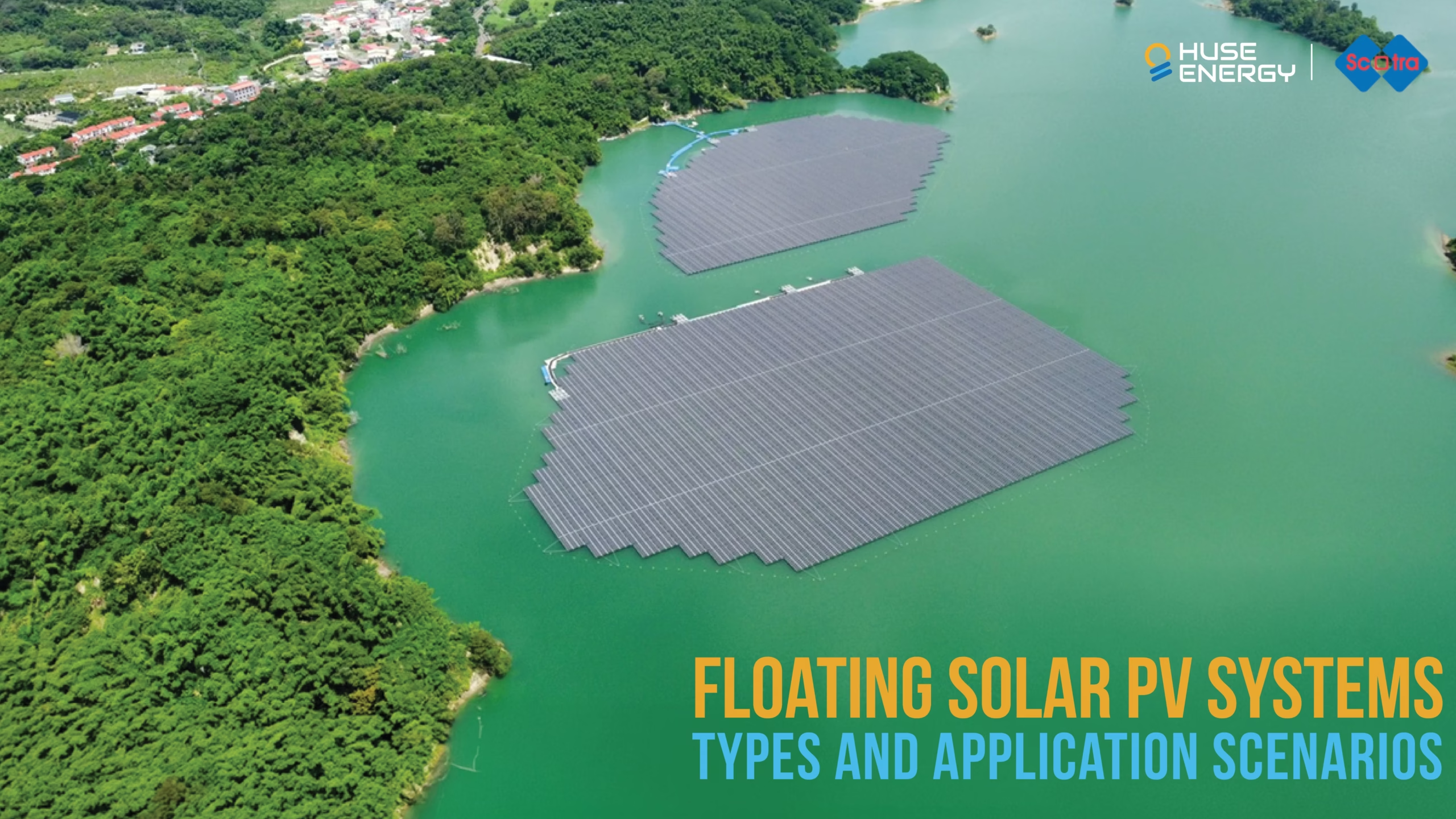
There is not enough good land for solar farms anymore, but there is a lot of water that remains untapped. The latest engineering invention consists of floating solar panels on top of the water surface. A floating solar PV system produces green energy while sparing land for agricultural and urban purposes. This guide explores its different types, advantages, disadvantages, and six applications where it can be used. Find out which one suits your water body here.
Understanding Floating Solar PV Systems
Floating solar technology involves putting solar cells onto platforms floating above the surface of the water. The platforms act as supports that hold the solar cells in place, while conductors help deliver electricity to land. It is common when there are high land prices and space constraints.
A floating solar PV system benefits from the water under it, which helps maintain lower temperatures for the modules to function properly even in high temperatures. This is explained in the following sections.
What Types of Floating Solar Systems Are Used for Solar Power Generation?
Selection of floating foundations is dependent upon water depth, wave regime, and project scale. There are three common types that have been identified.
-
Floating Solar System Designs for Different Water Conditions
Pure floating designs float on water; therefore, their installation is easy, quick, and inexpensive. Nonetheless, they perform poorly under large waves and thus are ideal for use on still reservoirs and ponds.
-
Anchored Floating PV Systems for Greater Stability
The floating PV system> with anchors is able to withstand wind, flow, and wave action better than the free-floating system. For instance, the concrete blocks on the bottom of the lake can securely fix the floats in place.
-
Hybrid Solar and Hydropower Systems
Hybrid designs involve the combination of floating solar systems with hydropower plants, battery systems, or fish breeding. For example, a design of floating solar on a dam can use the same transmission lines as those used by the powerhouse plant.
What Are the Main Benefits and Challenges of Floating Solar?
A floating solar PV system provides several benefits; however, they also pose some new engineering challenges. The following four statements analyze these issues in an unbiased manner.
-
Efficient Land Use and Increased Solar Deployment Potential
According to the National Institute of Solar Energy of India, the floating power generation potential is estimated at 102 GW in the country’s inland water bodies. Consequently, floating solar plants increase solar capacity without requiring any agricultural land or urban space.
-
Energy Generation Benefits and Cooling Effects
Increased efficiency due to lower operating temperatures, particularly on hot afternoons, is an added advantage. Due to the cooling effect of water on the floating PV panels, the cost will be comparable to that of a ground-based system.
-
Installation Costs and Maintenance Challenges
Use of floats, anchoring, and waterproofing results in greater costs at the outset compared to that of an equivalent-sized land-based system. In addition, walkway floats allow workers to access the panels for regular maintenance and cleaning.
-
Environmental Impacts and Water Quality Considerations
Panels cast shade on the water below, potentially influencing plant life and the environment for the fish. Hence, it becomes important for developers to monitor water quality, as there is little consensus in India.
Where Can Floating Solar System Be Used? Six Key Application Scenarios
The >floating solar system is applicable for many types of water bodies as long as depth, accessibility, and proximity to the power grid permit. Six case studies demonstrate places where floating solar projects are either in use or highly feasible.
-
Reservoirs and Hydropower Dams
Lakes contain the most extensive projects because dams already have connections to the grid. In addition, plants can use solar power during the day and rely on stored water at night.
-
Industrial Water Storage Ponds
Storage ponds are usually within the factory premises, and that makes the cable distance shorter. Additionally, the solar panels will prevent evaporation of the water in the pond.
-
Agricultural Irrigation Ponds
Panels can limit evaporation and provide power for pumping in irrigation tanks. Hence, floating solar plants in India could prove useful in saving water as well as energy for farmers.
-
Wastewater Treatment Plants
Many wastewater facilities have big tanks with excess capacity on the surface. At the same time, solar energy generation may compensate for some electricity consumption of the plant.
-
Fish Farms and Aquaculture Facilities
Aquaculture pond panels help regulate temperature fluctuations in water. However, shading should be limited, as too much can adversely affect fish and aquatic life.
-
Industrial and Municipal Water Bodies for Grid-Connected Projects
Urban lakes and municipal reservoirs provide a source of electricity supply without land scarcity issues. Hence, it is important to undertake a feasibility study on such lakes and reservoirs.
Why Choose Huse Energy for a Floating Solar PV System?
The floating solar PV system could be pure, moored, or hybrid and will depend on the type of water body to be used. It will save space, increase productivity, and require proper costing and environmental planning
Huse Energy designs and manufactures floaters and also offers you turnkey EPC services. Our tailor-made design is specific to your location, and our professionals will manage all phases of your project implementation.